
As building regulations tighten and expectations around energy efficiency, indoor air quality and durability increase, the performance of window systems is under greater scrutiny than ever. For architects and specifiers working on high-performance buildings, insulated frames in timber-aluminium windows are a critical design consideration — particularly when targeting a Frame Surface Temperature Index (FRSI) greater than 0.8.
While glazing performance often dominates specification discussions, the frame plays an equally important role in controlling thermal bridging, surface temperatures, condensation risk and mould growth. Failure to address frame insulation can undermine whole-building performance and compromise long-term durability.
FRSI Explained: A Key Indicator of Condensation and Mould Risk
The Frame Surface Temperature Index (FRSI) measures the relationship between the minimum internal surface temperature of a window frame and the internal air temperature under standardised conditions. An FRSI value above 0.8 indicates that internal frame surfaces remain sufficiently warm to significantly reduce the risk of surface condensation.
This is not merely a theoretical metric. Low internal surface temperatures are a primary driver of condensation, mould growth and occupant discomfort, particularly in airtight and highly insulated buildings where moisture levels can be elevated. As such, FRSI is increasingly referenced by building physicists, sustainability consultants and standards bodies as a meaningful indicator of real-world performance.
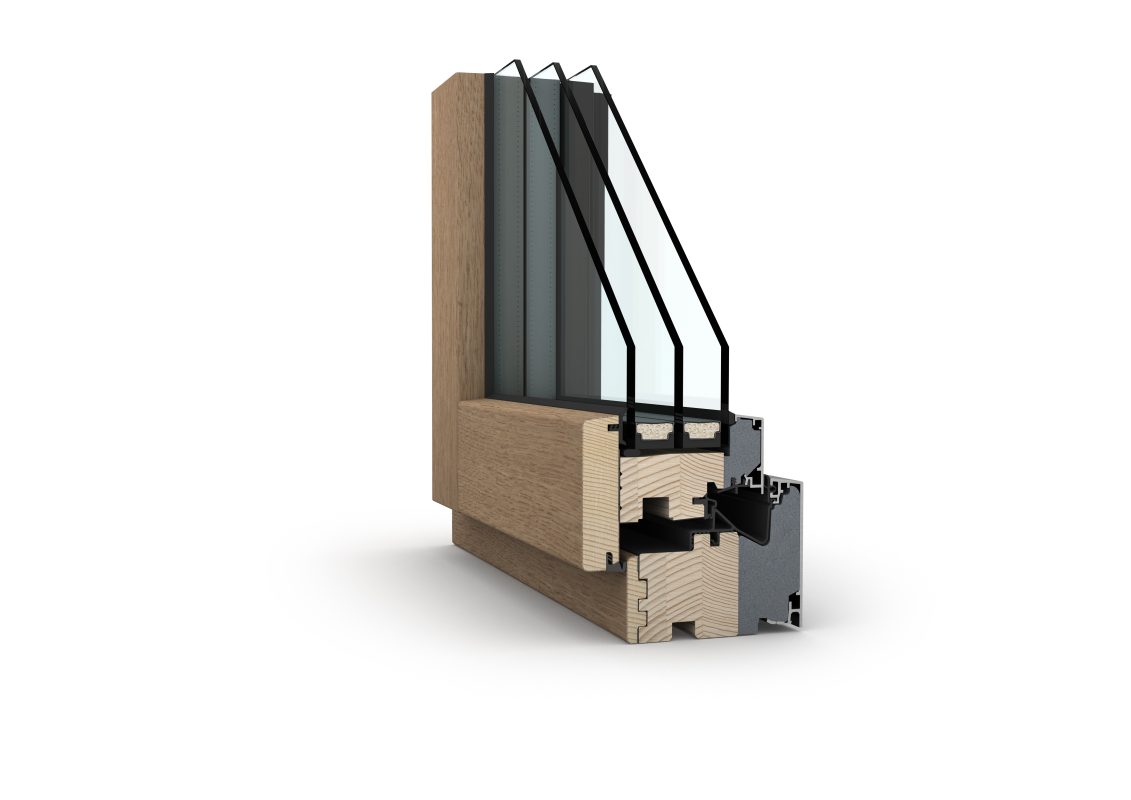
Thermal Bridging: The Weak Point in Poorly Designed Frames
In timber-aluminium windows, the combination of materials offers clear advantages: timber provides excellent thermal resistance and internal comfort, while aluminium delivers external durability, weather protection and minimal maintenance. However, aluminium’s high thermal conductivity means that inadequate thermal separation within the frame creates thermal bridges.
Without sufficient insulation, these thermal bridges reduce internal surface temperatures at the frame, leading to:
- Increased risk of surface condensation
- Localised mould growth at frame edges and reveals
- Reduced thermal comfort due to cold radiant surfaces
- Degradation of finishes and seals over time
High-performance insulated frames incorporate thermal breaks, insulated cavities and optimised material junctions to interrupt conductive heat flow. The result is a significantly improved FRSI, typically exceeding the 0.8 threshold required for condensation control.
Mould Growth and Indoor Air Quality
From a building health perspective, mould growth around windows is one of the most common defects observed in both residential and non-residential buildings. It is most frequently linked to low surface temperatures rather than excessive indoor humidity alone.
Where insulated frames are absent or poorly designed, internal frame surfaces can fall below the dew point for extended periods. This creates ideal conditions for mould spores to colonise, particularly in bedrooms, schools, healthcare buildings and offices.
Specifying timber-aluminium windows with insulated frames and an FRSI > 0.8 helps ensure that internal surfaces remain warm enough to mitigate this risk, supporting better indoor air quality, occupant wellbeing and regulatory compliance.
Longevity, Durability and Whole-Life Performance
Insulated frames also play a critical role in the long-term durability of timber-aluminium windows. Cold internal surfaces increase the likelihood of interstitial moisture, thermal stress and material fatigue. Over time, this can lead to:
- Premature seal failure
- Degradation of timber elements
- Increased maintenance requirements
- Reduced service life of the window system
By maintaining higher and more consistent internal surface temperatures, insulated frames reduce thermal stress and moisture exposure, extending product lifespan and improving whole-life carbon and cost performance.
Specification Beyond U-Values
For architects and specifiers, achieving high-performance fenestration means looking beyond headline U-values. A robust specification should consider:
- Frame insulation strategy
- Verified FRSI performance (>0.8)
- Thermal bridge-free detailing at junctions
- Condensation and mould risk analysis
- Compatibility with airtightness strategies
In this context, insulated frames in timber-aluminium windows are not an optional enhancement – they are a fundamental requirement for high-quality, future-proof building design.
Conclusion
As buildings become more energy efficient and airtight, the consequences of poor thermal detailing become more pronounced. Insulated frames that deliver an FRSI greater than 0.8 are essential for controlling condensation, preventing mould growth, ensuring occupant comfort and protecting long-term durability. For architects and specifiers committed to performance-led design, the window frame is not just a detail – it is a critical component of the building envelope.
If you would like to discuss a project, please email the information to: office@internorm.co.uk for smaller domestic projects, or commercial@internorm.com for large residential project.
Author: Vasilis Giannopoulos, Passivhaus Designer and Specifications Manager at Internorm UK